

Why egg donation?
"Trust in an established procedure"
In 1978, Louise Brown was born in Oldham, England. She was the first so-called "test-tube baby", i.e. the first person conceived through artificial insemination. Only five years later, the first fertility treatments with egg donation took place. Today's reproductive medicine therefore has decades of experience in this field.
The decisive factor for IVF therapy with the eggs of another woman as donor is the couple's medical situation, which is clarified in detail during the initial consultation with a physician. This also includes detailed information. Of course, the treating physician will also take the time to answer all of the couple's personal questions as well as possible, including questions close to their hearts, e.g. about the genetic situation, the child's resemblance and the mother-child relationship.
All this forms the foundation for the shared path to the child you long for: trust
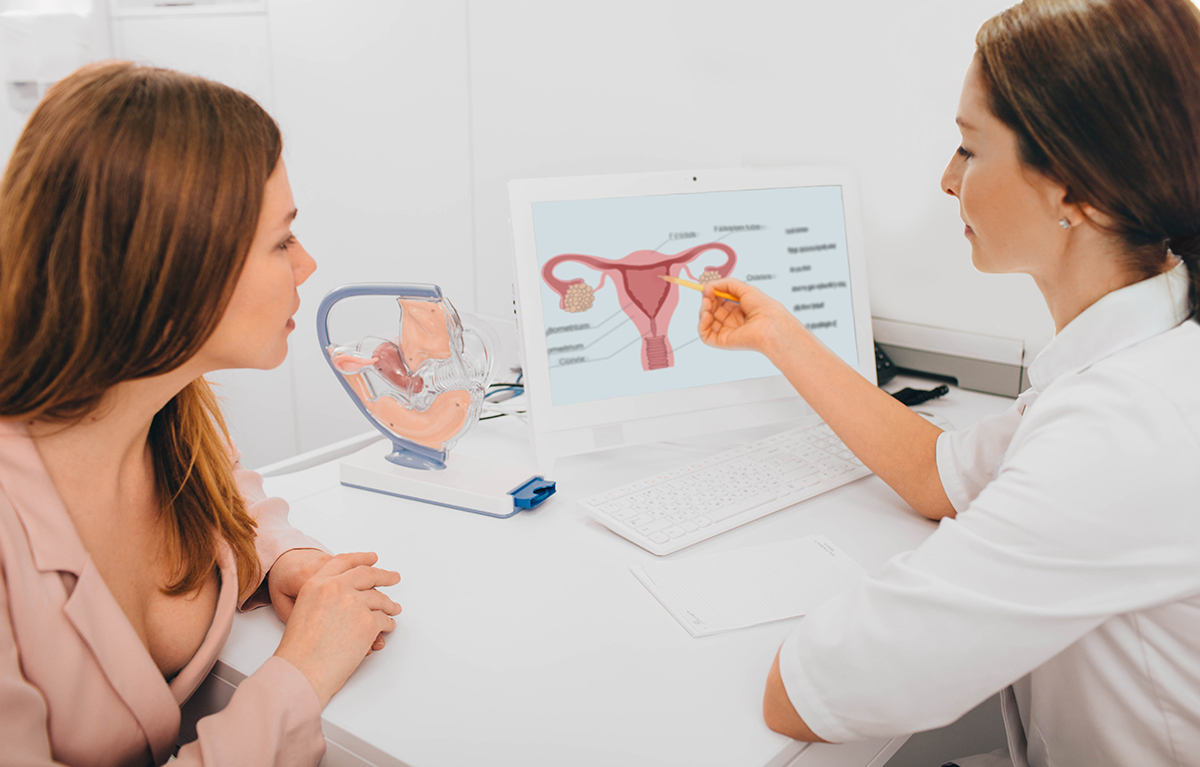
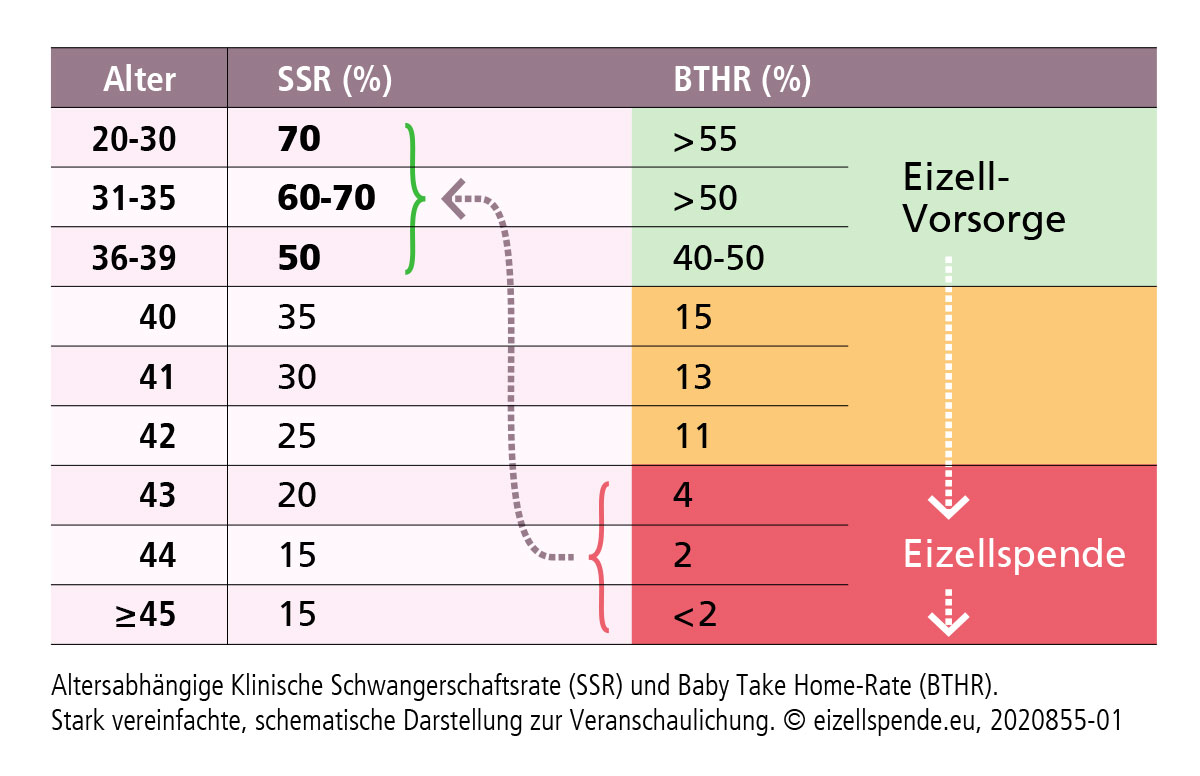
Chart: Clinical pregnancy rate (SSR) and birth rate (BTHR) after fertility treatment | Recommendation depending on the woman's age: egg freezing before the age of 30–35, egg donation from the age of 43–44.