
Indications
Medical indications for egg donation
In the following situations, fertility treatment with egg donation can offer affected couples a possibility:
- after surgical removal of both ovaries
- after chemotherapy or radiotherapy of the pelvis
- after treatment of malignant diseases
- in the case of so-called premature menopause, i.e. premature decline in ovarian function (premature ovarian failure)
- in the case of genetic diseases of the woman (e.g. Turner syndrome, gonadal dysgenesis)
- in the case of repeated occurrence of pathological embryos during IVF / ICSI / IMSI
- in the case of repeated fertilisation failure during IVF / ICSI / IMSI
- in the case of repeatedly negative pregnancy tests after embryo transfer

In addition to these medical causes, social developments can also play a role. This means that more and more women and men want to start a family later in life. The wish for a child is usually postponed beyond the age of 35. From the age of 40, the ovarian reserve is already greatly reduced. This means that, with increasing age, it becomes more and more difficult to become pregnant spontaneously and thus with one's own eggs.
The situation at an "advanced" age
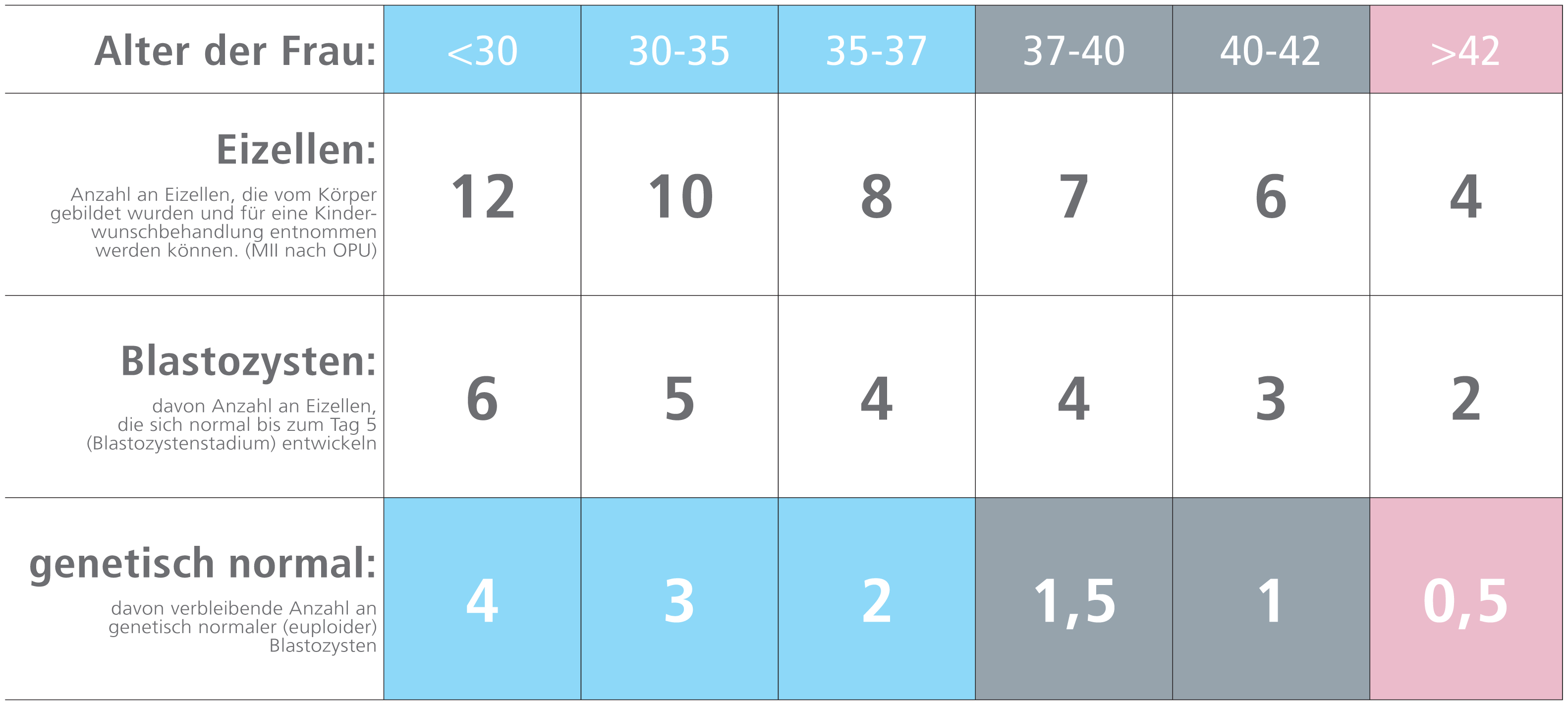
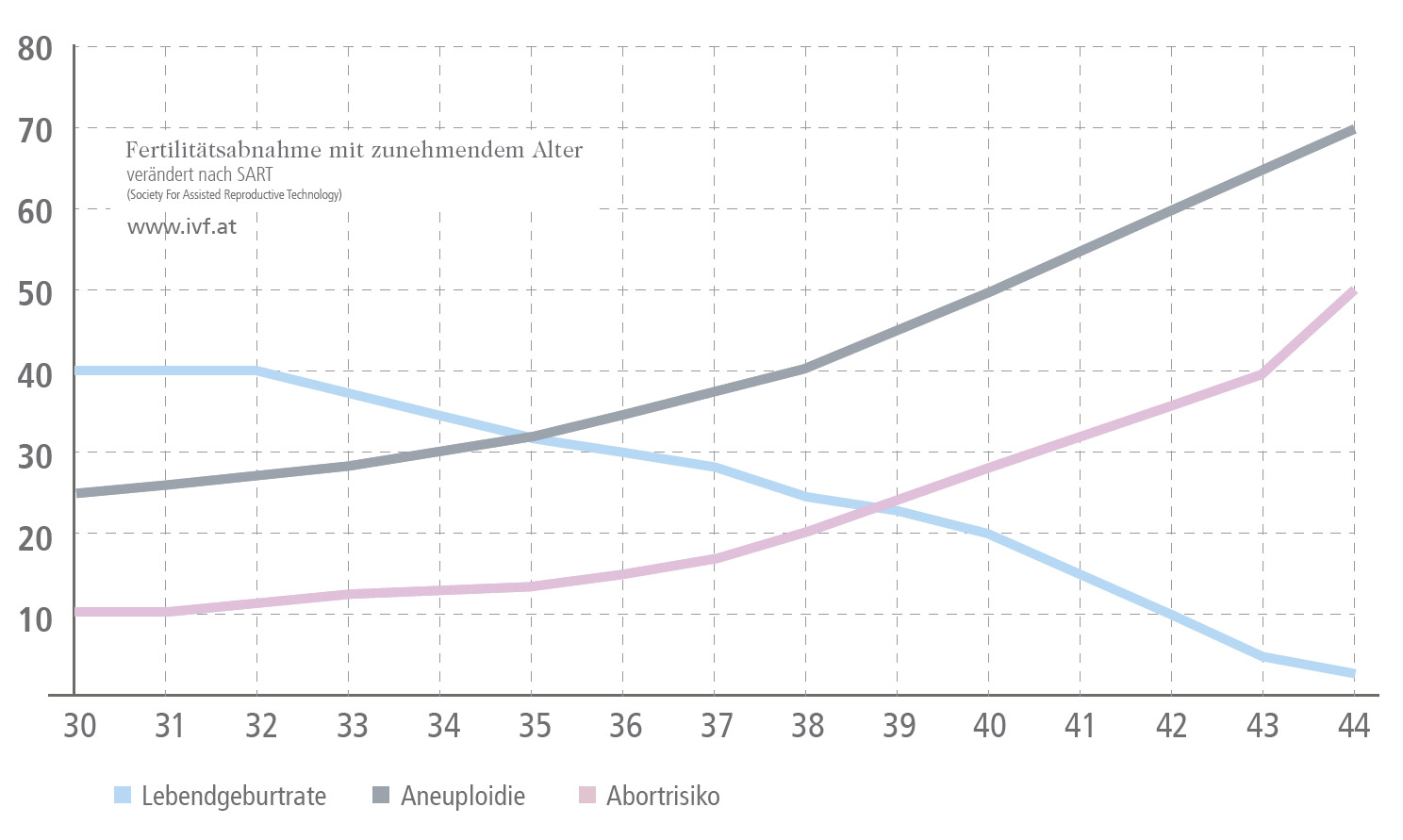
A woman's natural fertility peaks between the ages of about 25 and 35. After the age of 38, fertility declines. From the age of 43, the chances of a natural pregnancy are unfortunately significantly reduced. The greatest influence on female fertility is exerted by the quantity and quality of the eggs, both of which decrease with increasing age.
Another point that plays a major role at an "advanced" age is an increased risk of changes in the chromosome set (aneuploidy – too many or too few chromosomes) in the egg. In very many cases, these eggs do not lead to fertilisation and implantation, or result in miscarriages, and consequently not to an intact pregnancy.
These aspects make it clear why fertility treatment with egg donation can also be an option because of the woman's age.
Decline in fertility
with increasing age (woman)
Number of eggs and development
potential by age (woman)